Single fixed panel (walk-in)
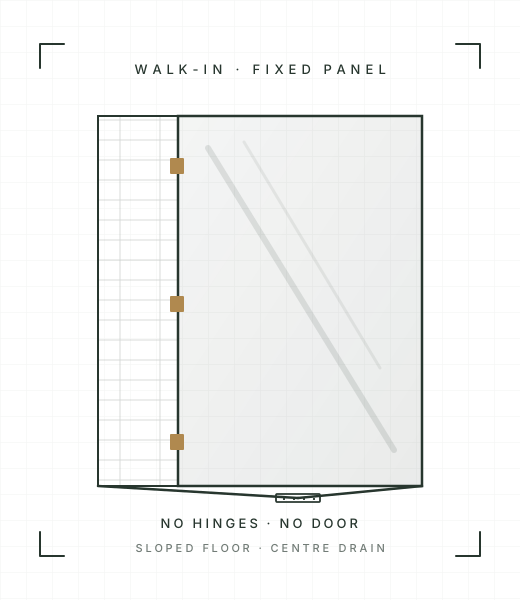
One vertical glass panel mounted floor-to-ceiling or to a defined header. The cleanest possible enclosure.
Service · Showers
Fixed panels, splash guards, and walk-in configurations.
Overview
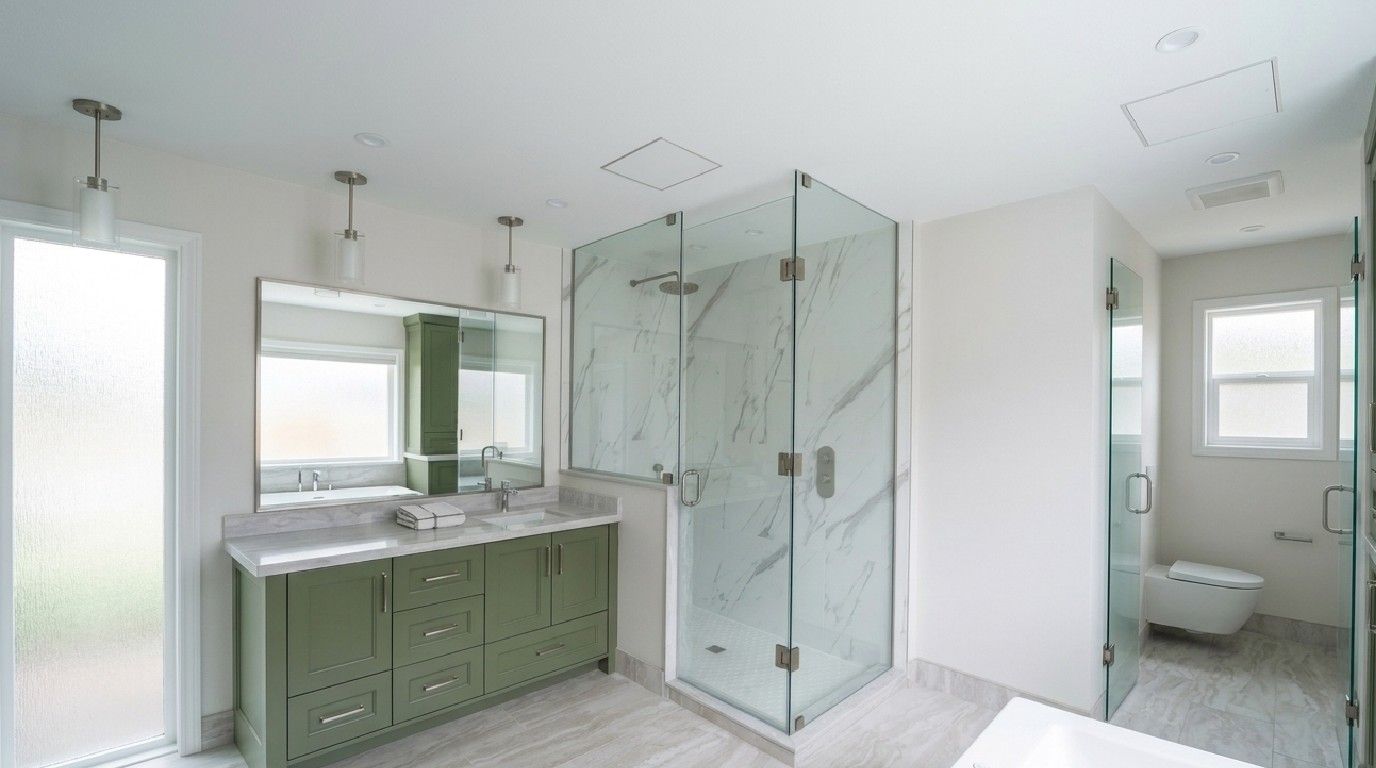
Fixed panels are the simplest possible shower enclosure. No hinges, no door, just glass placed where it needs to be. For walk-in showers and splash-guard applications, this is often the most architectural choice. With no moving parts, there’s nothing to maintain mechanically over the life of the install, and the look is contemporary.
Most fixed-panel walk-ins we install are one of three layouts. Simplest is a single tall panel attached to one wall with the floor sloped to drain, which is the cleanest option and the one that suits a primary bath best. Tighter showers, where the spray pattern would otherwise carry past the panel, add a small return at the floor edge for extra containment. Where the client wants no clip hardware at all, the panel slots into low-profile floor and ceiling channels for full structural support, and the finished wall looks monolithic.
Walk-in panels almost always pair with curbless or low-curb showers, where the visual continuity between the bathroom floor and the shower floor is part of the design. That’s where the panel-and-slope detailing matters most, and where a properly-specified single panel does the work of a full enclosure with a fraction of the hardware.
Splash guards are the smaller cousin. These short panels mount at the tub or shower edge to block spray without committing to a full enclosure. Common in primary baths where the shower is over a tub and a curtain feels too informal but a full enclosure is overkill. Splash guards typically run 60 to 66 inches tall and are anchored either with a base channel and clips or directly to the wall with through-glass hardware. The hardware finish gets coordinated against the rest of the bath fixtures so the guard matches the room instead of standing out as an accessory.
For walk-ins specifically, the floor slope matters as much as the glass placement. The shower floor needs to slope toward the drain at a sufficient angle to keep water from pooling at the edges; without proper slope, even a perfect panel placement won’t contain spray. We confirm the slope at the in-home measure and flag it before fabrication if the existing floor needs adjustment by your tile contractor. That correction is a tile-scope job, not a glass-scope job, and getting it right before the panel is ordered is the difference between a clean install and a water-on-the-floor problem six months in.
Included
Options
One vertical glass panel mounted floor-to-ceiling or to a defined header. The cleanest possible enclosure.
Smaller panel mounted at the tub or shower edge to block spray without a full enclosure.
Panel set into a low-profile floor channel and ceiling track for full structural support without exposed hardware.
Glass & finish
Eight glass types and fourteen hardware finishes, all picked at the in-home measure.
Glass types
Hardware finishes
FAQ