Frameless / standoff
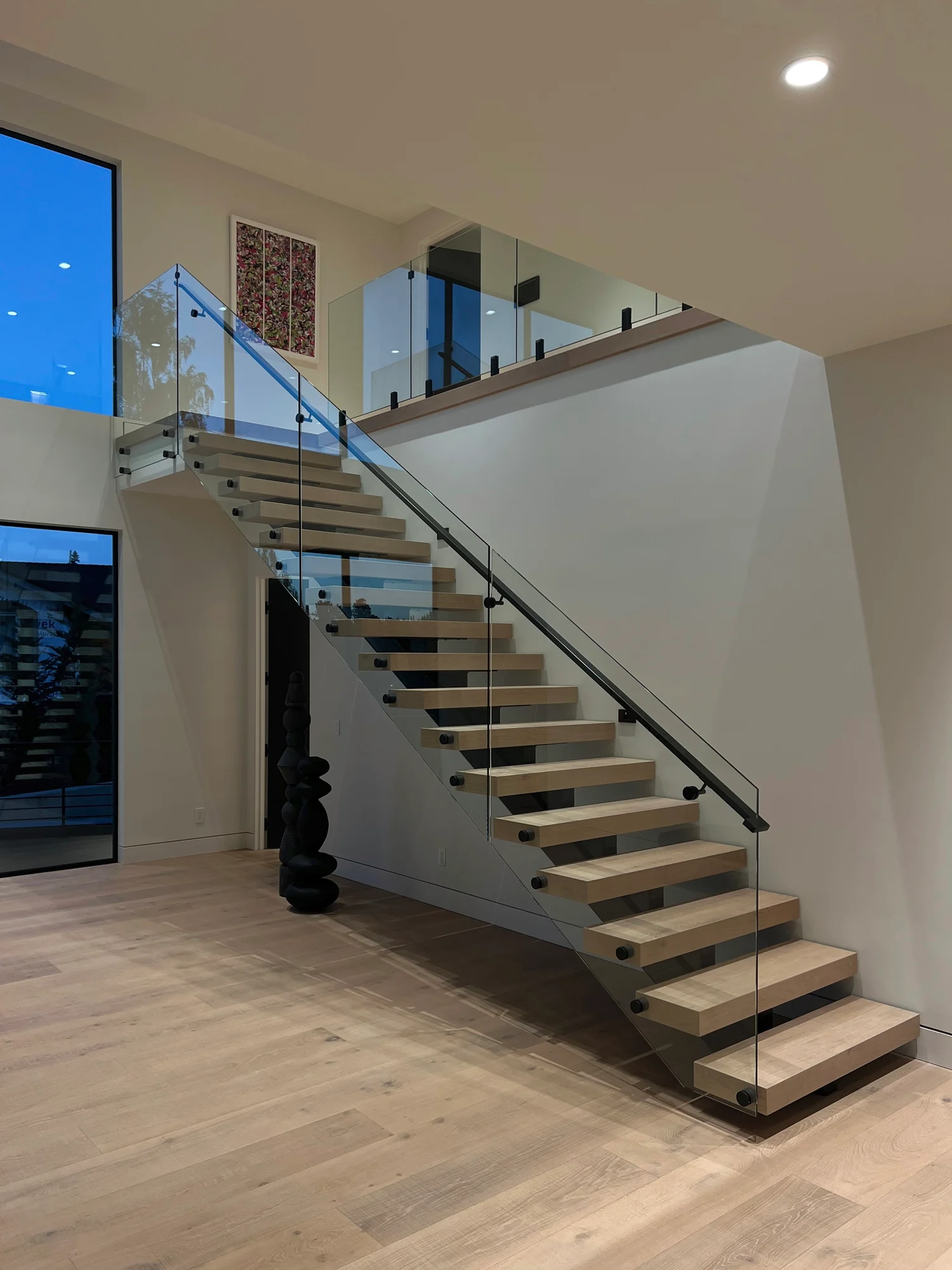
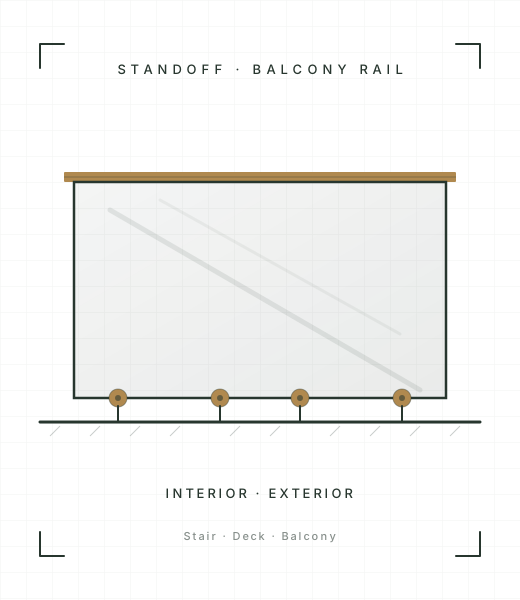
Glass anchored by stainless standoff buttons through the panel face. No top rail, no posts, just glass.
Service · Railings & Architectural
Frameless/standoff and framed-with-panel systems, interior and exterior.
Overview
Glass railings are the one product on this list that is structural and life-safety code-governed at the same time as being architectural. A shower door that’s off by a sixteenth is a callback; a guardrail that’s under-anchored is a fall. The visual goal is an uninterrupted sightline, glass instead of pickets and light instead of a wall. The build itself is governed by panel thickness, glass type, anchorage, and the load the system has to survive. We do interior stair railings and exterior balcony and deck railings, in standoff/frameless, base-shoe, and framed post-and-clip configurations, and we detail every one to pass inspection in its jurisdiction.
The first thing that gets decided is height and whether a guard is even required. Building codes require a guard wherever a walking surface is roughly 30 inches or more above what’s below it. Residential one- and two-family work generally follows the IRC at a 36-inch minimum guard height; commercial, multifamily, and public work follows the IBC at 42 inches; and stair guards that double as the graspable handrail fall in the 34 to 38 inch band. Some jurisdictions amend these upward even for houses, so the governing number is whatever your local building department has adopted. Tim confirms that against the project before any glass is ordered.
The load requirements are where frameless glass railings get engineered rather than just installed. A guard has to resist a 200-pound concentrated load applied in any direction at the top, plus a 50-pound-per-linear-foot uniform load along the top rail, and the glass infill has to take its own load without the differential deflection between two panels exceeding the glass thickness. In a framed system the posts and rail carry that; in a frameless standoff or base-shoe system the glass panel itself is the structural member, which drives both the thickness and the maximum panel width. This is why we size panels to an engineered system rather than eyeballing them. A frameless run that looks right and isn’t rated is a failed inspection at best.
Glass type is the other code-driven decision, and it’s the one homeowners are most often surprised by. Current codes push toward laminated glass for most guard applications. Laminated means two bonded plies with an interlayer that holds the panel together if it breaks, instead of monolithic tempered that lets go all at once. Monolithic tempered glass, where it’s still permitted, requires a continuous top rail tied across at least three panels so the system stays in place if one panel fails. The widely used exception is laminated tempered glass tested to the relevant standard, which can run with no top rail at all. That’s how a true frameless, no-cap-rail look gets approved. Which path your project takes depends on whether it’s interior or exterior, residential or commercial, the wind exposure, and what the AHJ will sign off on. We spec the glass to that, not to whatever looks cleanest in isolation.
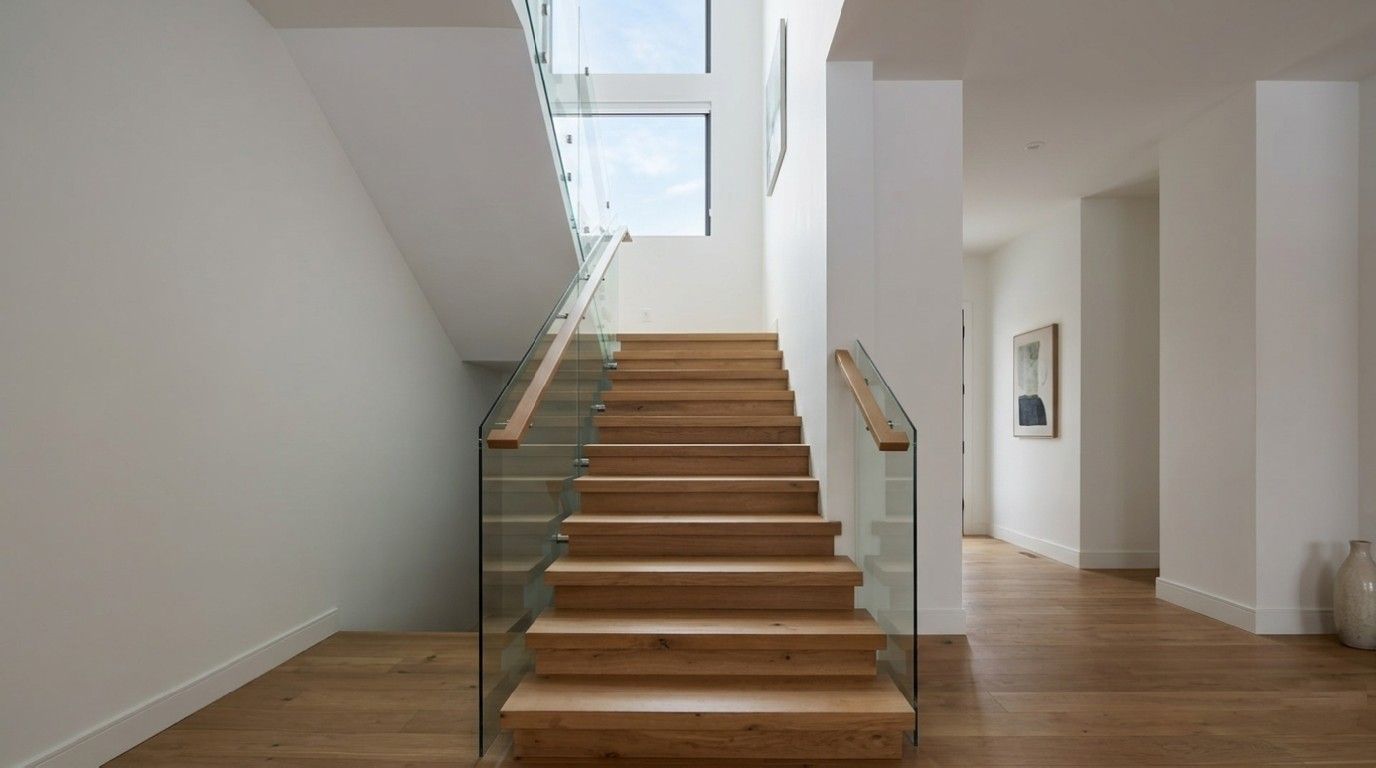
Stair railings are where the fabrication gets exacting. Each panel runs alongside the stringer with its angles cut to match the tread pitch, so the run is templated tread by tread rather than ordered to a nominal length. Most stair guards pair the glass with a wood or metal handrail at graspable height, and the guard and handrail requirements have to be coordinated so one assembly satisfies both. Standoff and base-shoe systems both work on stairs; which one is right depends on the stringer construction and how minimal the client wants the hardware to look. Multi-flight runs in three-story townhomes and custom homes are a regular part of this work.
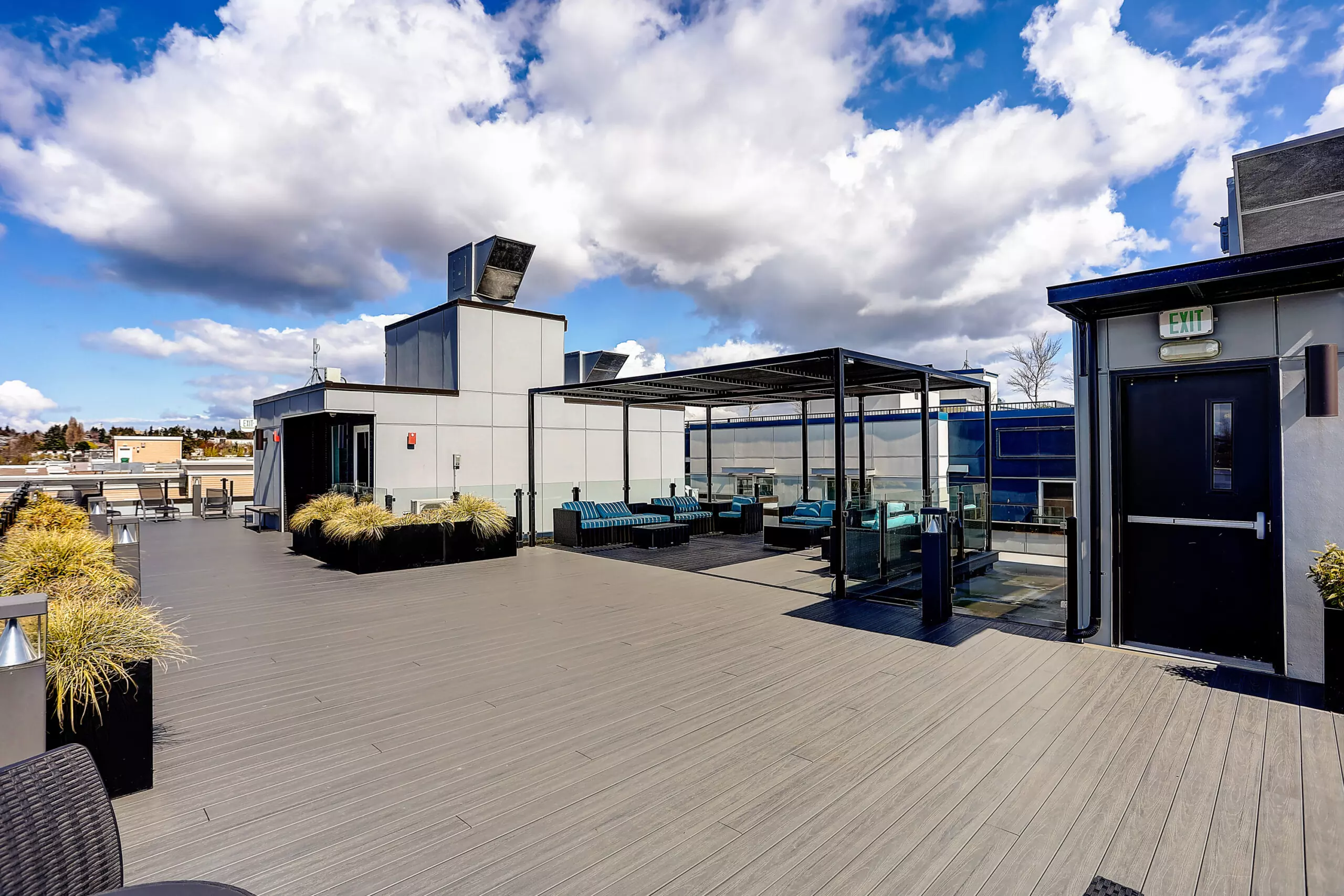
Exterior railings add wind load and corrosion to the picture. A deck or balcony rail on a Sound-facing site sees real wind pressure, and the hardware has to be corrosion-resistant stainless because Pacific Northwest weather is unforgiving on under-spec anchors. Raised decks and balconies typically also need a permit and, often, engineered drawings. We detail to that requirement rather than discovering it at inspection.
Included
Options
Glass anchored by stainless standoff buttons through the panel face. No top rail, no posts, just glass.
A continuous aluminum channel along the floor or stair stringer accepts the glass. The look is clean and linear, with no point loads.
Metal posts and top rail with glass panels between; the structural and visual approach when codes or wind loads call for it.
Glass run alongside stair stringers, often with a wood or metal handrail; angles cut to match each tread.
Exterior glass railings rated for wind load and laminated for safety on raised decks and balconies.
Recent work
FAQ