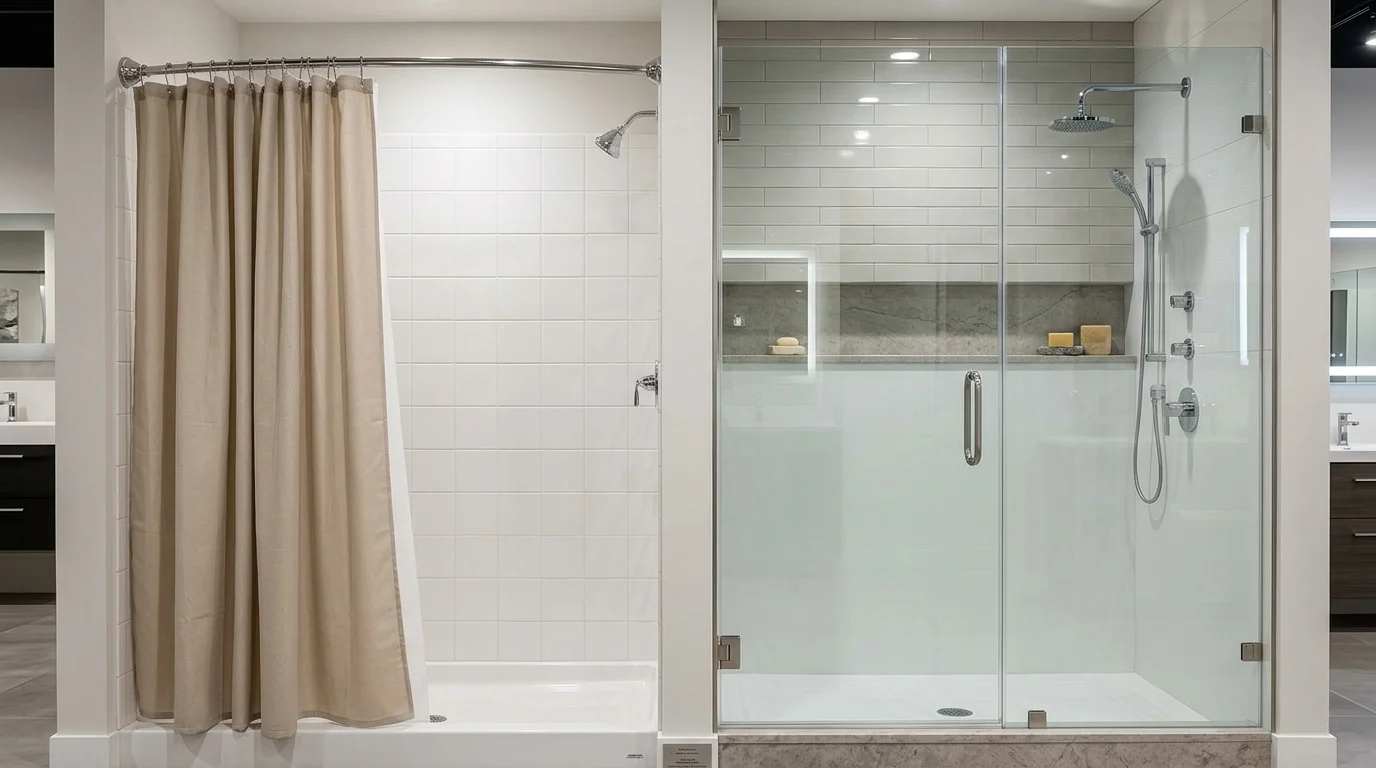
About a third of the projects we install are upgrades from an existing fabric or vinyl shower curtain to a glass enclosure. The owner has lived with the curtain for years, and in some cases decades. The bathroom remodel is the moment to change it. The question we hear before we measure: is the upgrade worth it?
The answer is almost always yes, but for reasons people don’t always anticipate going in. Here is what actually changes and what stays the same.
What changes
Appearance. The most obvious one. A glass enclosure changes the visual character of the bathroom from “functional” to “designed.” Light passes through the panel, the tile and stone behind the glass become part of the room rather than something hidden by a curtain, and the shower stops being a visual interruption.
This effect is bigger than it sounds. People who upgrade often comment that the bathroom feels noticeably larger, even though no walls moved. What changed is that the visible volume of the room is no longer cut off by an opaque curtain.
Water containment. Done well, a glass enclosure contains water meaningfully better than a curtain. Curtains rely on the user pulling them closed and water pressure not pushing them out. Both of those fail predictably. Frameless enclosures with proper sweeps and panel placement contain water effectively for the life of the install.
The qualifier is “done well.” A glass shower measured wrong can leak more than a curtain. Wrong panel height, wrong sweep, or wrong door swing will all do it. We measure carefully, and on the rare occasion something needs adjusting after install, the 1-year warranty covers it.
Light transmission. Bathrooms with limited natural light benefit substantially. The curtain blocks light from the shower side of the room; glass doesn’t. If your shower is on the wall opposite the bathroom’s natural-light source, removing the curtain often turns the bathroom from dim to bright without changing fixtures or finishes.
Resale value. Real estate agents in the Seattle area consistently price homes higher when the primary bathroom has a glass enclosure rather than a curtain. The exact dollar impact varies by market segment and overall remodel, but it’s measurable. A glass shower reads as a renovated bathroom; a curtain reads as a bathroom that hasn’t been updated.
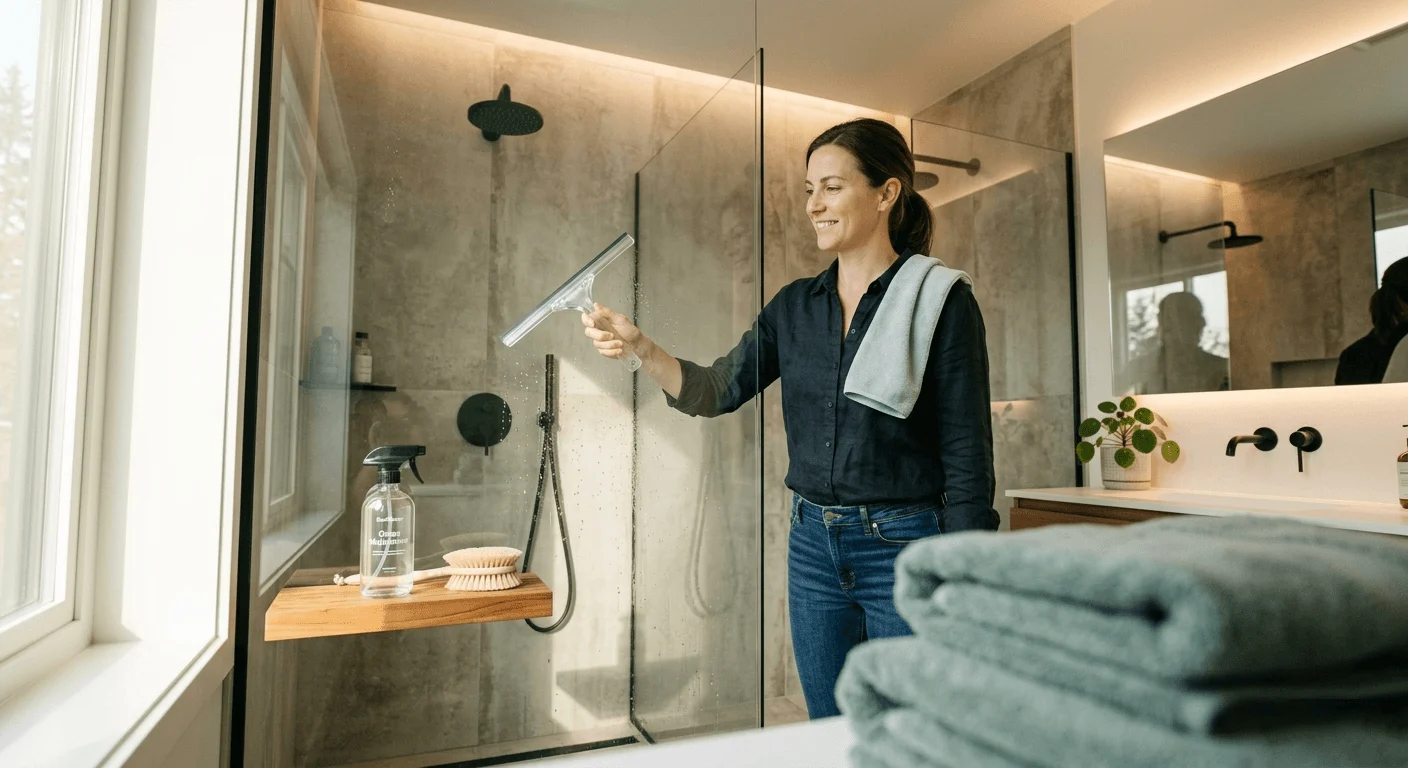
Maintenance pattern. This is the change people are least prepared for. Curtains require occasional washing or replacement and otherwise require no thought. Glass requires the daily squeegee habit and weekly cleaning we wrote about in another article. Neither is hard, but they’re different patterns. People who switch sometimes underestimate how much the squeegee habit matters.
What doesn’t change
The fundamentals of waterproofing. A glass enclosure does not fix a poorly waterproofed bathroom. If the tile, grout, and substrate behind the curtain weren’t installed correctly, glass will reveal that, not solve it. Any remodel that includes a curtain-to-glass upgrade should also include verifying or redoing the substrate waterproofing.
The footprint of the shower. Glass goes where the existing tile is. Unless the remodel includes moving walls or changing the shower’s footprint, you get the same physical space, just better-defined.
Cleaning effort, broadly. People sometimes assume glass is inherently lower maintenance than a curtain. In raw effort terms it isn’t. The maintenance is visible instead of invisible. A clean glass enclosure looks great; a slightly dirty one looks dirty. A curtain hides everything until you wash it.
Roughly what it costs
Costs vary widely based on configuration, glass type, and hardware finish:
- Tub-shower combinations (sliding glass over an existing tub) tend to be the most affordable upgrade and the fastest to install
- Frameless enclosures with hinged doors in standard openings sit in the middle of the range
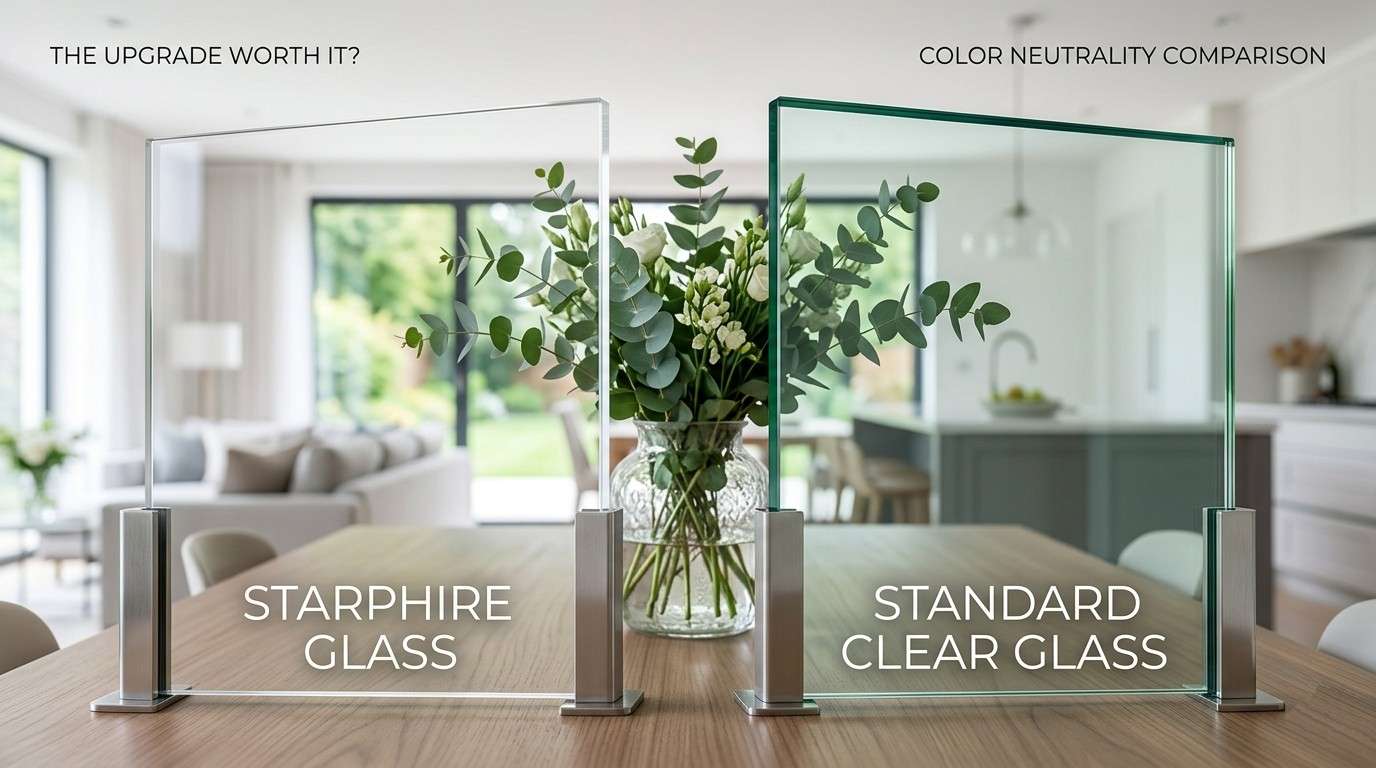
- Custom heavy-glass installations with oversize panels, low-iron glass, and premium hardware run highest
We don’t quote dollar figures online. Opening dimensions, glass type, hardware finish, hinge configuration, and site conditions all move the number, and a figure out of context tends to mislead more than it helps. The in-home consultation includes a precise quote based on actual measurements and the choices you make on glass and hardware.
When curtains still make sense
Keeping a curtain is the right call in a few situations.
Rentals and short-term housing. If you’re renting or expect to move within a couple of years, the financial logic doesn’t favor the upgrade. A nice tension-rod curtain costs a few hundred dollars, including the rod and an attractive curtain. A glass installation is a fixed investment in the property and can run several thousand dollars.
Temporary spaces. Pool houses, guest cottages, or basement bathrooms used occasionally. The maintenance routine glass requires only makes sense when the shower gets daily use.
Primary bathrooms with no remodel budget. Curtains paired with newer hardware, a fresh liner, and a designed curtain choice can present beautifully. In a thoughtfully composed bathroom, a high-end curtain is a design choice rather than a compromise. We’ve installed glass for clients who happily lived with intentional curtain setups for years before the broader remodel made glass the right move.
What surprises people most
If we polled clients a year after installing a curtain-to-glass upgrade, the most common surprise isn’t the look or the water containment. It’s how much brighter the bathroom feels.
People plan for the upgrade thinking about appearance and resale. They don’t expect the room itself to feel meaningfully larger and lighter once the curtain is gone. That’s the part that, in eighteen years of installs, comes up most often as the unexpected benefit.
If you’re considering the upgrade and want to walk through what would fit your bathroom, get a free in-home consultation →.