The single most common question I hear after a shower installation is some version of: “How do I keep this looking new?”
The honest answer is that it takes a small amount of consistent effort, the right products, and avoiding a handful of well-meaning mistakes that will damage the glass or hardware faster than normal use ever could. None of it is hard. This is the routine.
Why shower glass spots in the first place
Two things stick to wet glass: minerals and soap scum.
Greater Seattle’s tap water has a moderate-to-high mineral content depending on neighborhood. King County water from the Cedar River system runs softer than most U.S. cities; private wells and certain neighborhoods (especially in eastside cities like Bellevue and Issaquah) can run noticeably harder. When water dries on glass, the dissolved minerals stay behind as a film. Calcium and magnesium are the main ones. That’s the cloudy white residue everyone recognizes.
Soap scum is what you get when soap reacts with those same minerals. It’s stickier than mineral residue and doesn’t rinse off as easily.
Both build up gradually. Glass that looks fine after a week looks hazy after a month if it isn’t maintained, and after a year it can be permanently etched if neglected. The difference between a shower that looks new at year five and one that looks tired at year two is the routine.
Squeegee daily and walk away
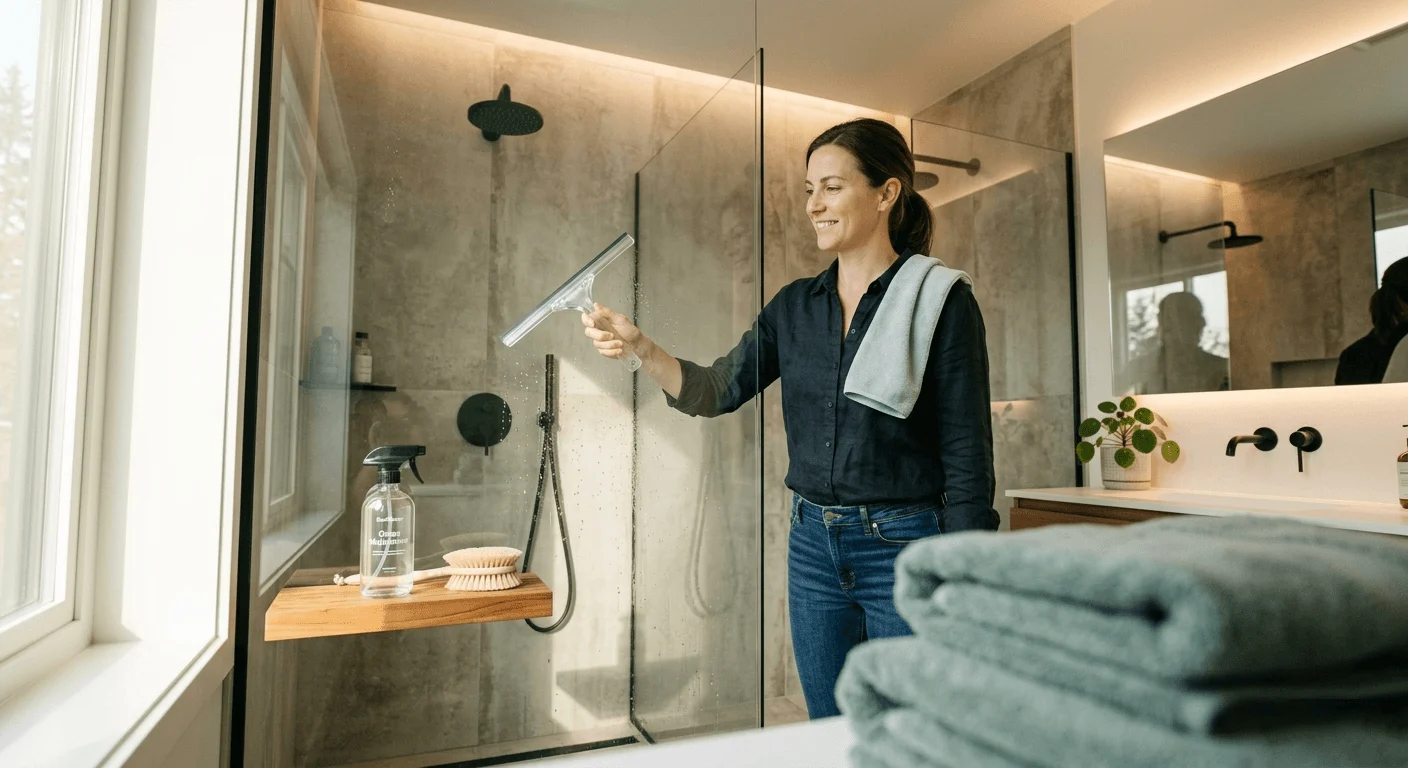
After every shower, run a squeegee down the glass. Top to bottom, working across the panel in vertical strokes. Total time: about 30 seconds.
This is the single highest-impact thing you can do. A squeegee removes the standing water before the minerals have a chance to deposit. No standing water, no spots. Skip the squeegee and every later cleaning step gets harder.
Keep the squeegee on a hook inside the shower. Out of sight is out of mind, and habit only forms when the tool is two feet away.
Wipe weekly with a glass cleaner
Once a week, after a normal shower, spray the glass with a non-acidic glass cleaner and wipe down with a microfiber cloth. Brand doesn’t matter much; what matters is that it’s not acidic.
Why non-acidic: many “shower cleaners” sold at retail contain mild acids that are harsh on hardware finishes and on coated glass. Citric, phosphoric, and proprietary blends are the usual ones. They work in the short term and damage the installation in the long term. A standard ammonia-free glass cleaner does the job without the corrosion risk.
A 50/50 distilled water and white vinegar solution in a spray bottle works as a homemade alternative for weekly use, but only on smooth clear glass and only if you avoid contact with the hardware. The acidity in vinegar is mild enough for weekly glass cleaning but will eventually pit polished and bronze hardware finishes if it’s used routinely. On textured glass like P516, Rain, or Barock, skip the vinegar. Acid pooled inside the surface texture can etch the pattern unevenly over time.
Deep clean monthly
Once a month, a longer session. Wet the glass with hot water. Apply your cleaner of choice, and the gentler the better. Bar Keepers Friend’s “Soft Cleanser” version is one I’ve seen work well. Never the powdered version, which is abrasive. Let it sit for a few minutes. Wipe with microfiber. Rinse thoroughly.
For mineral spots that have built up despite squeegeeing, this is where they get removed. For glass that’s been neglected longer than a month, it may take two passes.
What not to do
The fastest ways to shorten the life of an installation:
Acidic cleaners on textured glass. P516 and other patterned glasses (Rain, Barock) trap a small amount of any liquid you spray on the surface inside the texture. With acidic cleaners, that pooled acid keeps working long after the cleaner would have been rinsed off a flat panel. The etching that results shows up unevenly across the pattern. Stick to neutral, ammonia-free glass cleaners on textured glass.
Abrasives. Powdered cleansers, scouring pads, magic erasers used aggressively, anything that physically scrubs at the glass. Glass is hard but not unscratchable, and once you’ve micro-scratched the surface, the scratches catch soap and mineral residue and the glass never looks the same. On textured patterns like P516, abrasion also flattens the high points of the texture and the pattern goes dull where it’s been scrubbed. Microfiber and soft cloths only.
Ammonia on metal hardware. Most over-the-counter glass cleaners are ammonia-based. Ammonia is fine on glass and aggressive toward most metal finishes. When you spray glass cleaner near hardware, it migrates onto the hardware. Over months and years it dulls finishes, especially polished brass and unlacquered brass. The fix is simple: spray cleaner onto the cloth, not directly onto the glass, and avoid the hardware areas. Wipe hardware separately with a damp cloth and dry.
Hardware care alongside glass care
Hardware finishes have their own maintenance:
- Polished and brushed metals (chrome, nickel, stainless): wipe down weekly with a damp soft cloth, dry immediately. No cleaners needed in normal use.
- Matte Black and Gunmetal: same as above. Avoid abrasives. Matte finishes show wear faster than polished.
- Live finishes (Unlacquered Brass): these are intended to patina. If you want to maintain the original brightness, polish with a brass-specific polish every few months. If you want the patina, do nothing. That’s the look you signed up for.
- All hinges and pivots: check annually that they’re snug. They occasionally need a quarter-turn of adjustment as the install settles. Our 1-year warranty covers this if it’s needed within the first year.
The case for P516 textured glass
If privacy matters in the bathroom, P516 textured glass is the option worth a closer look. That covers ensuites with shared sightlines, walk-ins next to a window, and shower walls visible from the bedroom. P516’s soft, mist-like pattern blocks close-range views while still passing daylight.
For maintenance, the trade-off is straightforward: textured glass hides hard-water spotting better than perfectly clear glass because the pattern breaks up the visible film, but soap residue can settle into the texture and needs a periodic neutral-cleaner wipe rather than a quick squeegee. In hard-water areas like much of King and Pierce County, that trade often lands in P516’s favor. You get fewer visible spots day-to-day in exchange for a slightly longer wipe-down once a month.
If you’re planning a remodel and want to talk through glass options including P516 textured glass, get a free in-home consultation →.