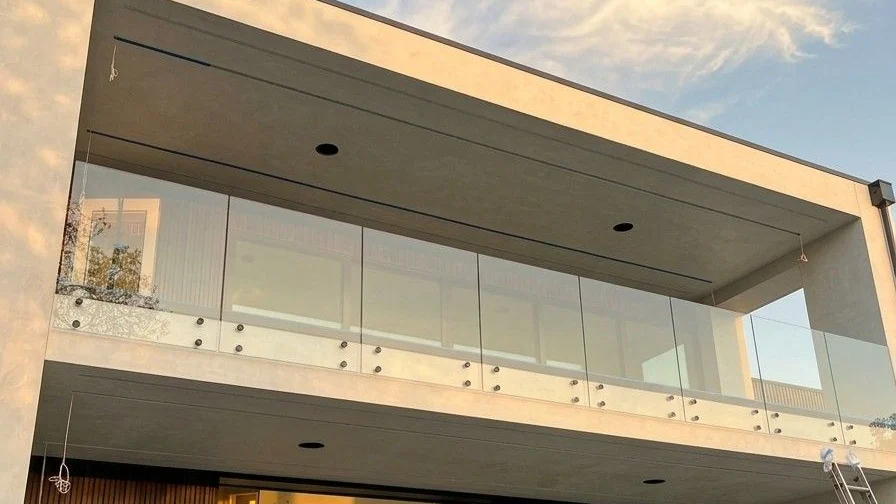
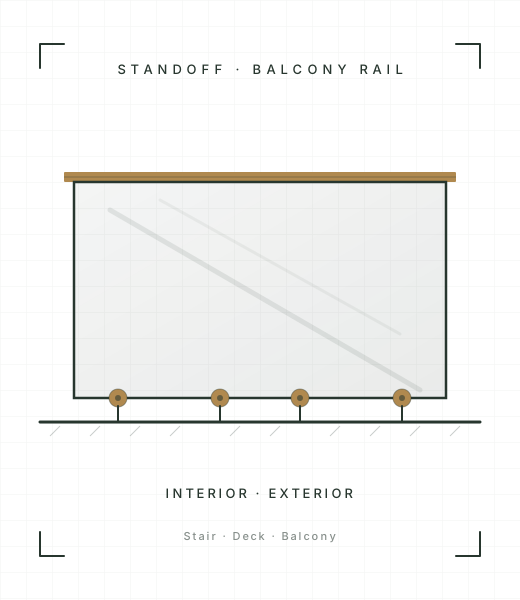
Standoffs on the balcony face
Glass fixed to the outside face of the balcony, so nothing sits on the deck surface. From outside, the railing reads as one clean band of glass.
Service · Railings & Architectural
Exterior glass for balconies on standoffs, a base shoe or a metal frame, with stainless hardware that won't rust.
Overview
A balcony railing is a guard first. It has to stop a fall and spend years outside in Pacific Northwest weather. Glass handles all of that and keeps the view, which is why most people want it on a balcony in the first place. We install glass balcony railings on custom homes and multifamily buildings around Greater Seattle, and Tim measures every one on site.
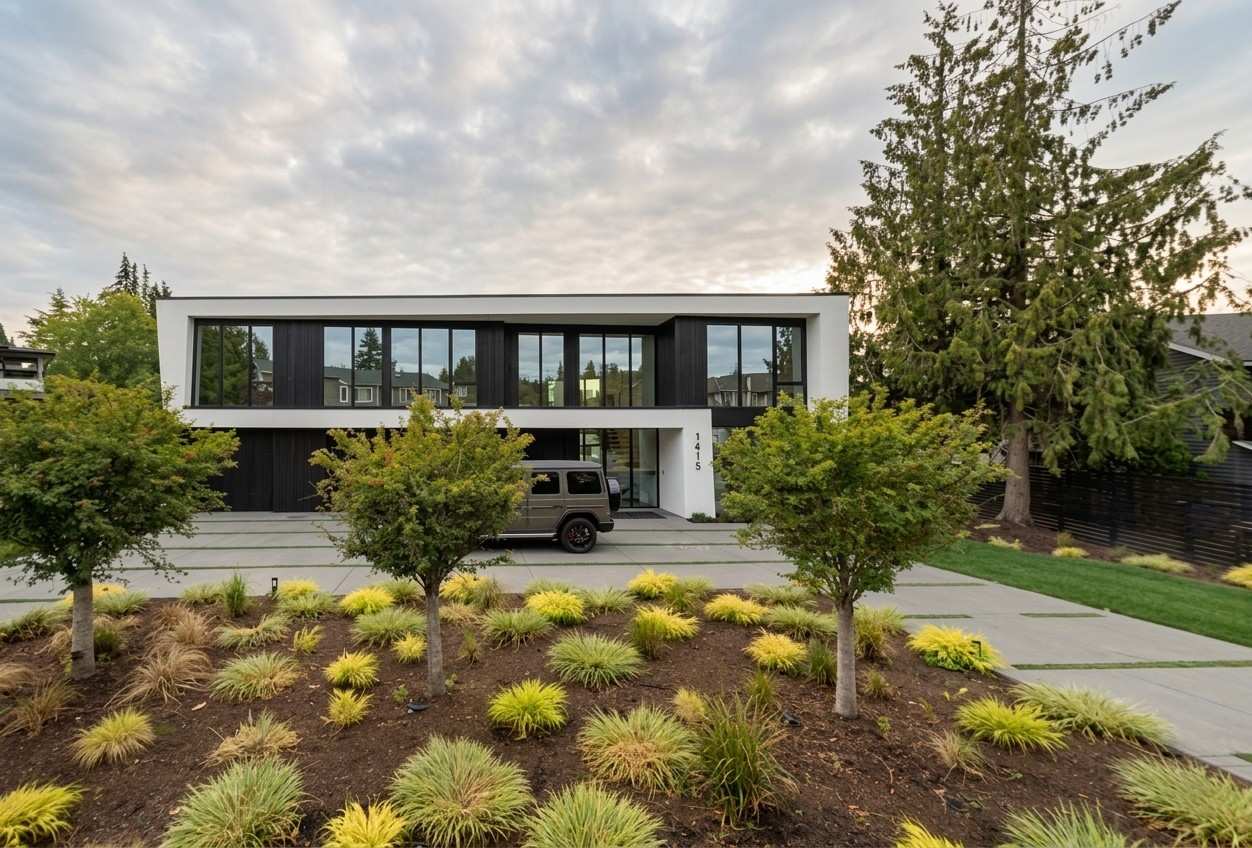
At a Clyde Hill estate, the balcony glass mounts to the outside face of the balcony on matte black standoffs. Nothing sits on the deck surface, and from the yard the railing reads as one clean band of glass. On the lake-facing balcony, the glass is the only thing between the deck and the view of the water.
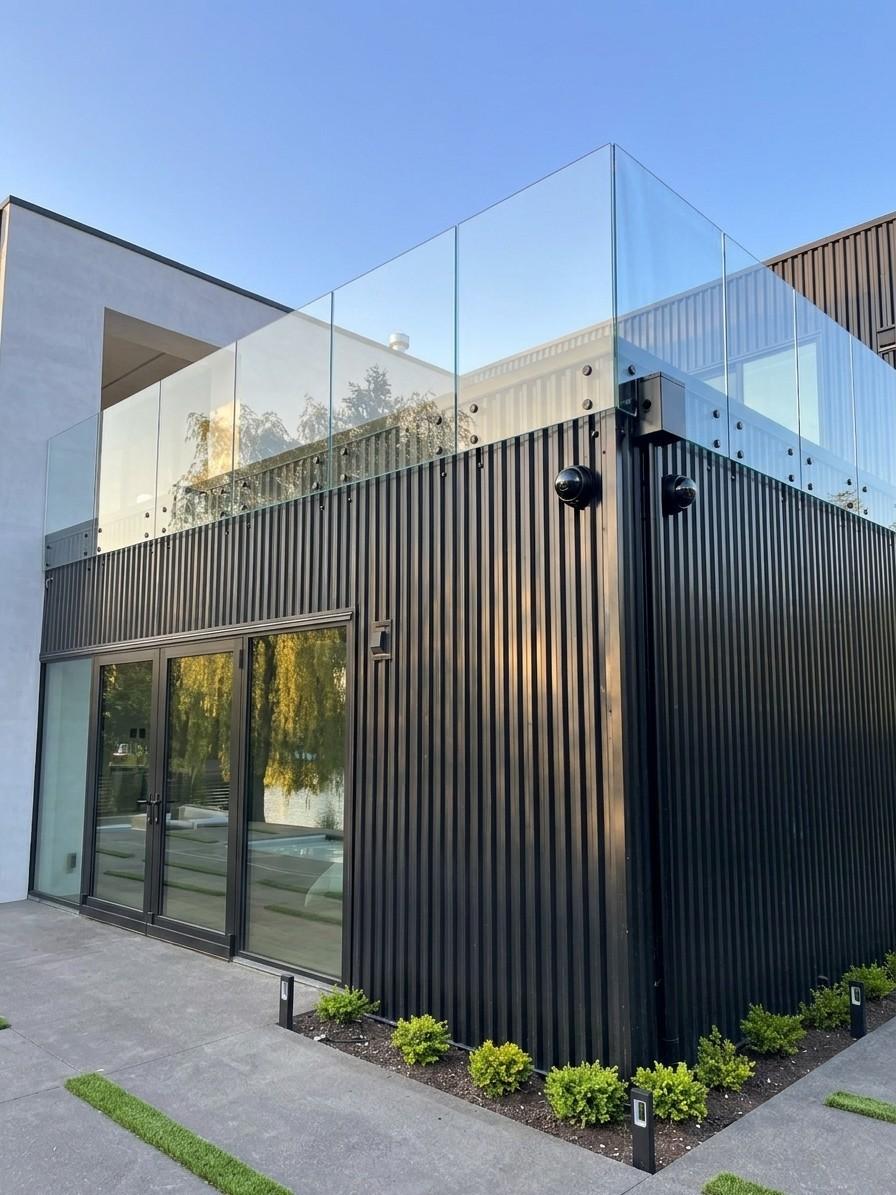
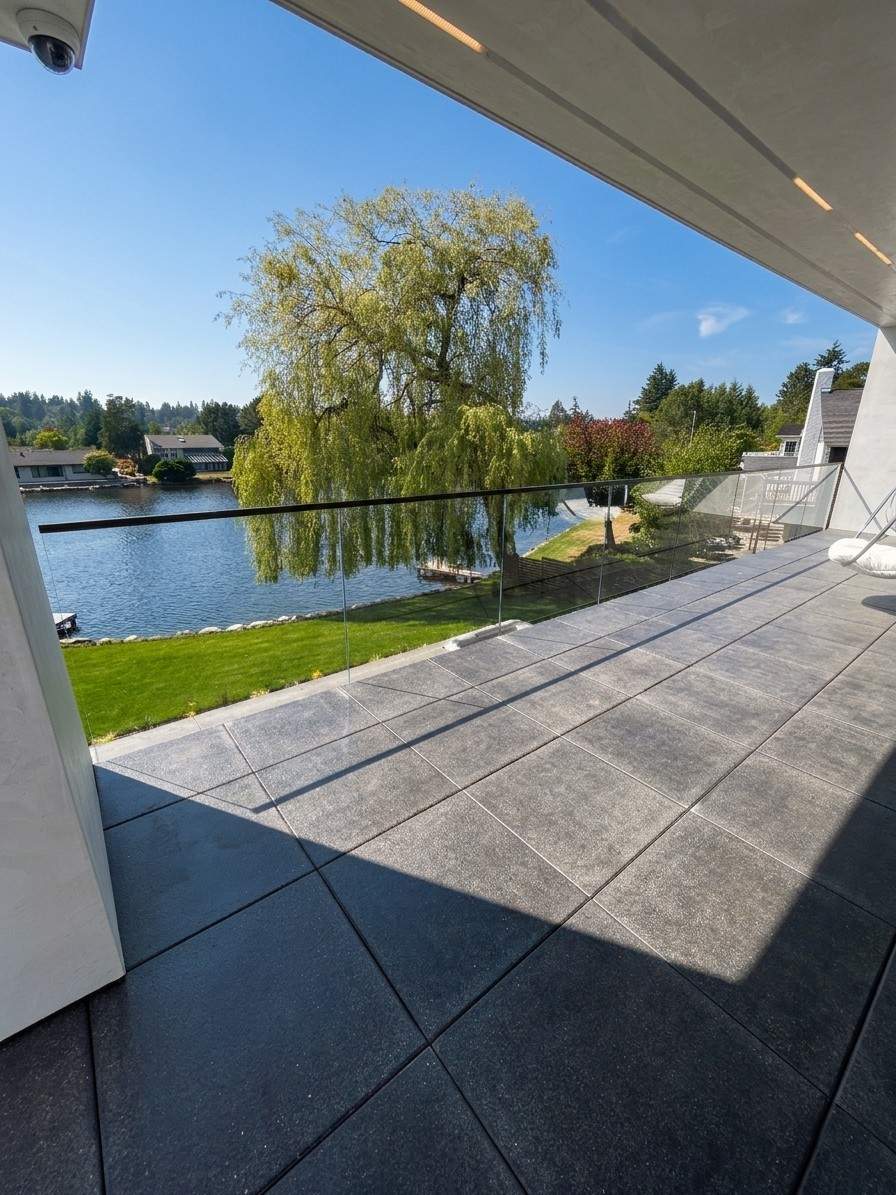
Standoffs go through holes in the glass, and those holes have to be made before the glass is tempered. Tim’s measurements set every hole position, which makes the measure the most important step on a standoff balcony.
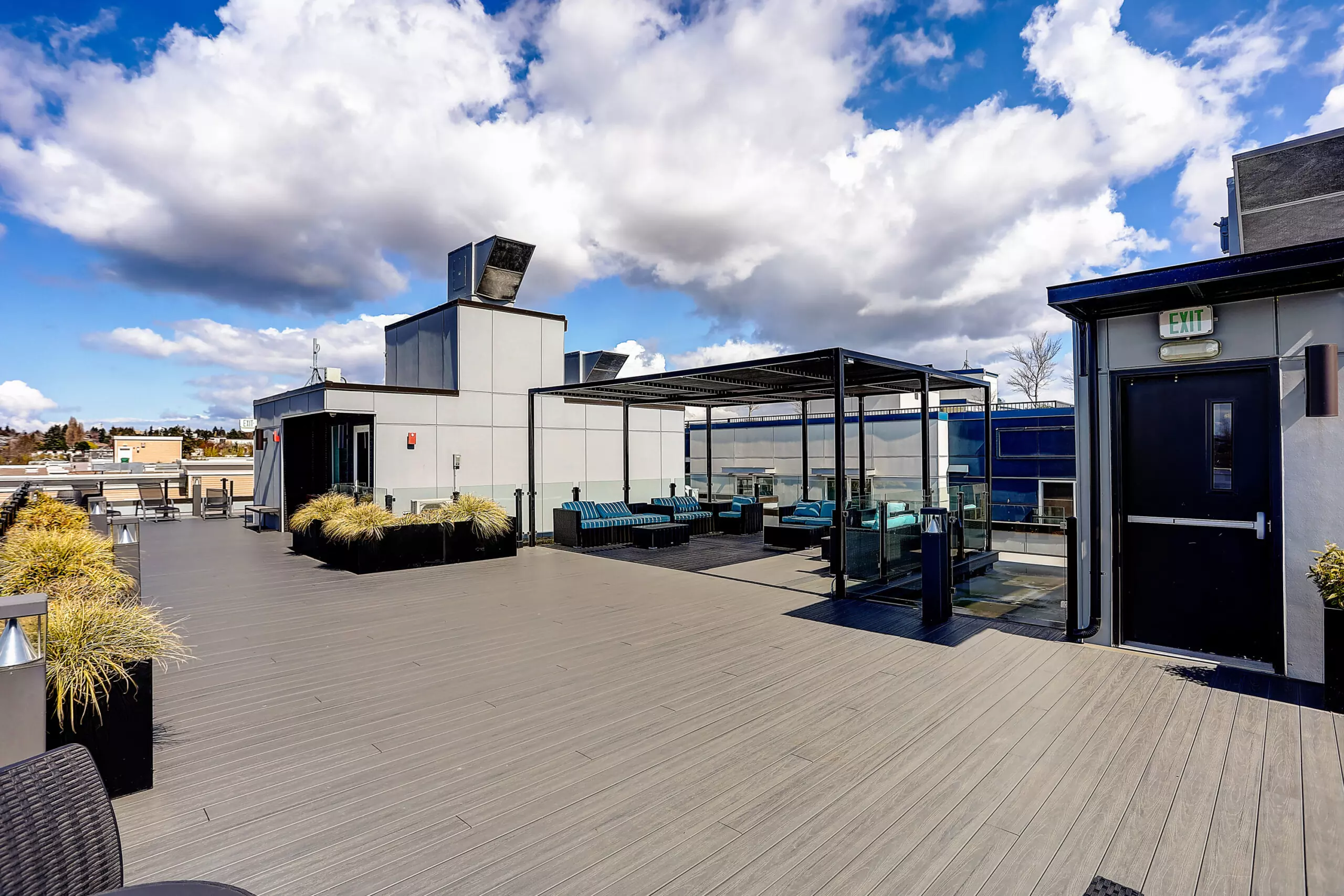
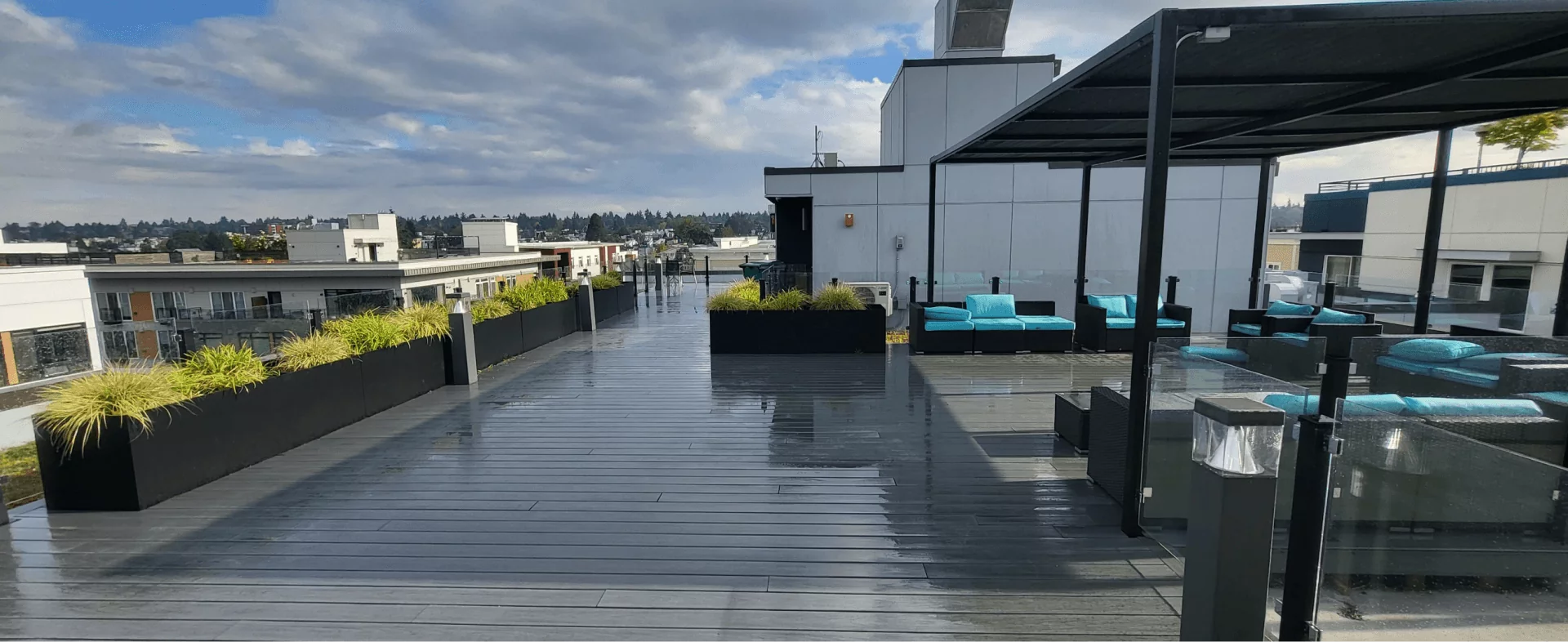
For Greenbuild, we installed the balcony and rooftop deck railings across a Seattle apartment complex. One balcony uses laminated tempered glass set in a base-shoe channel, a continuous track that holds the bottom edge of the panels. The rooftop deck uses an I-frame glass railing in matte black. Multifamily work runs on the developer’s schedule, and Greenbuild’s note on the job was “Schedule held, finishes were consistent unit to unit.”
Exterior guards follow the same code rules as interior ones. One- and two-family homes generally need a 36-inch guard, and multifamily and commercial buildings need 42 inches. A guard has to resist a 200-pound load at the top in any direction. Codes push toward laminated glass for most guards because it holds together if it breaks, and laminated glass tested to the right standard is what lets a railing run without a top rail. The full breakdown is on our glass railings page.
Exterior hardware has to stand up to Pacific Northwest rain, and to salt air near the Sound. Every rail and fitting we use outside is stainless steel or powder-coated stainless, so nothing rusts. Once the glass is clamped in, the railing is built to take a person leaning on it. Most raised balconies need a permit, and exterior work often needs engineered drawings submitted with it. We detail to that requirement up front instead of finding it at inspection.
Recent balcony work is in Clyde Hill, next to Bellevue, and in Seattle. For decks and rooftop decks, see deck glass railings, and for railings inside the house, see stair glass railings. If your balcony faces a view, our Starphire vs. standard clear glass guide covers whether low-iron glass is worth it.
Planning a balcony or rooftop deck railing? Request a free measure and Tim will look at the site in person.
Included
Options
Glass fixed to the outside face of the balcony, so nothing sits on the deck surface. From outside, the railing reads as one clean band of glass.
A continuous track that holds the bottom edge of the glass. We used it with laminated tempered glass on a Greenbuild Seattle apartment balcony.
Metal posts or an I-frame with glass infill, for when code or span calls for it. A Greenbuild rooftop deck uses an I-frame railing in matte black.
A metal rail across the top of the panels. Often required with monolithic tempered glass, and optional with laminated glass tested to run without one.
Recent work
FAQ