A professionally installed glass shower door costs $959 on average in the US, and most homeowners pay between $530 and $1,390, according to This Old House. Frameless doors cost more. HomeGuide puts a frameless door at $600 to $1,900 installed and a full frameless glass enclosure at up to $3,600.
Those are national figures. On our own jobs around Greater Seattle, a typical standard shower door runs about $1,800 to $2,200 or more installed (IGo Green Enterprises, November 2026). That’s a rough range, not a quote. Size, glass type and hardware move it most, and two doors in the same style can land far apart once you add up the size, the glass, the hardware and how square the walls are.
What national cost guides report
HomeGuide breaks installed cost down by door type. Installed means the door, the hardware and the labor together.
| Door type | Installed cost |
|---|---|
| Tub shower door | $400 to $1,000 |
| Framed | $400 to $1,100 |
| Semi-frameless | $500 to $1,550 |
| Frameless | $600 to $1,900 |
| Frameless glass enclosure | $800 to $3,600 |
| Corner or neo-angle | $900 to $2,000 |
| Custom | $1,400 to $3,300 |
Labor is only part of it. HomeGuide puts installation labor at $150 to $550 for a framed door, $200 to $600 for frameless and $800 to $1,500 for a custom enclosure. The glass and hardware make up the rest.
Treat any national table as a starting point. Labor rates and glass prices vary by region, and they change over time. Glass doesn’t swing in price the way lumber does, but in our experience it only goes up, so an older cost guide will read low.
What moves the price on a real job
Framed, semi-frameless or frameless
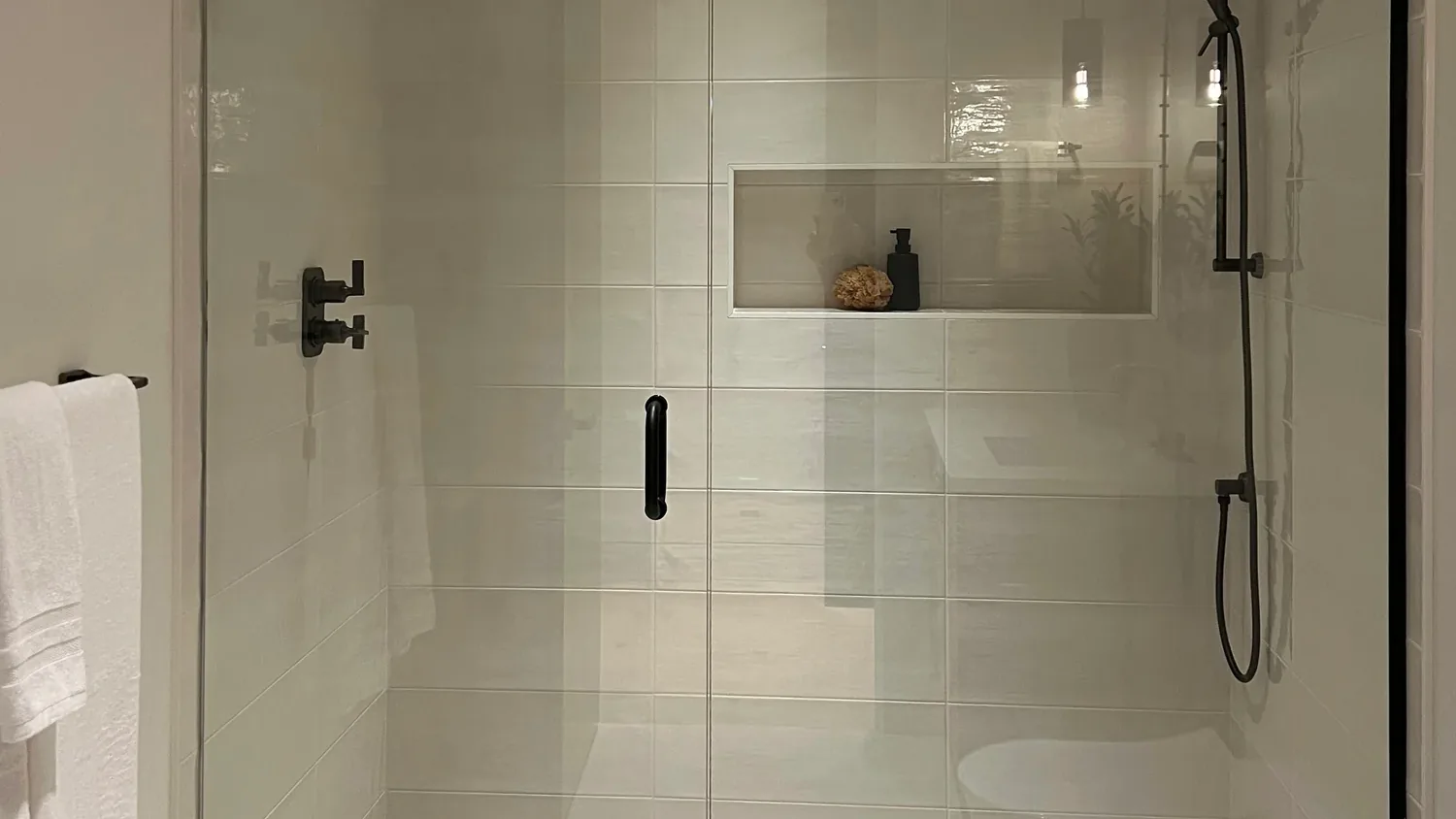
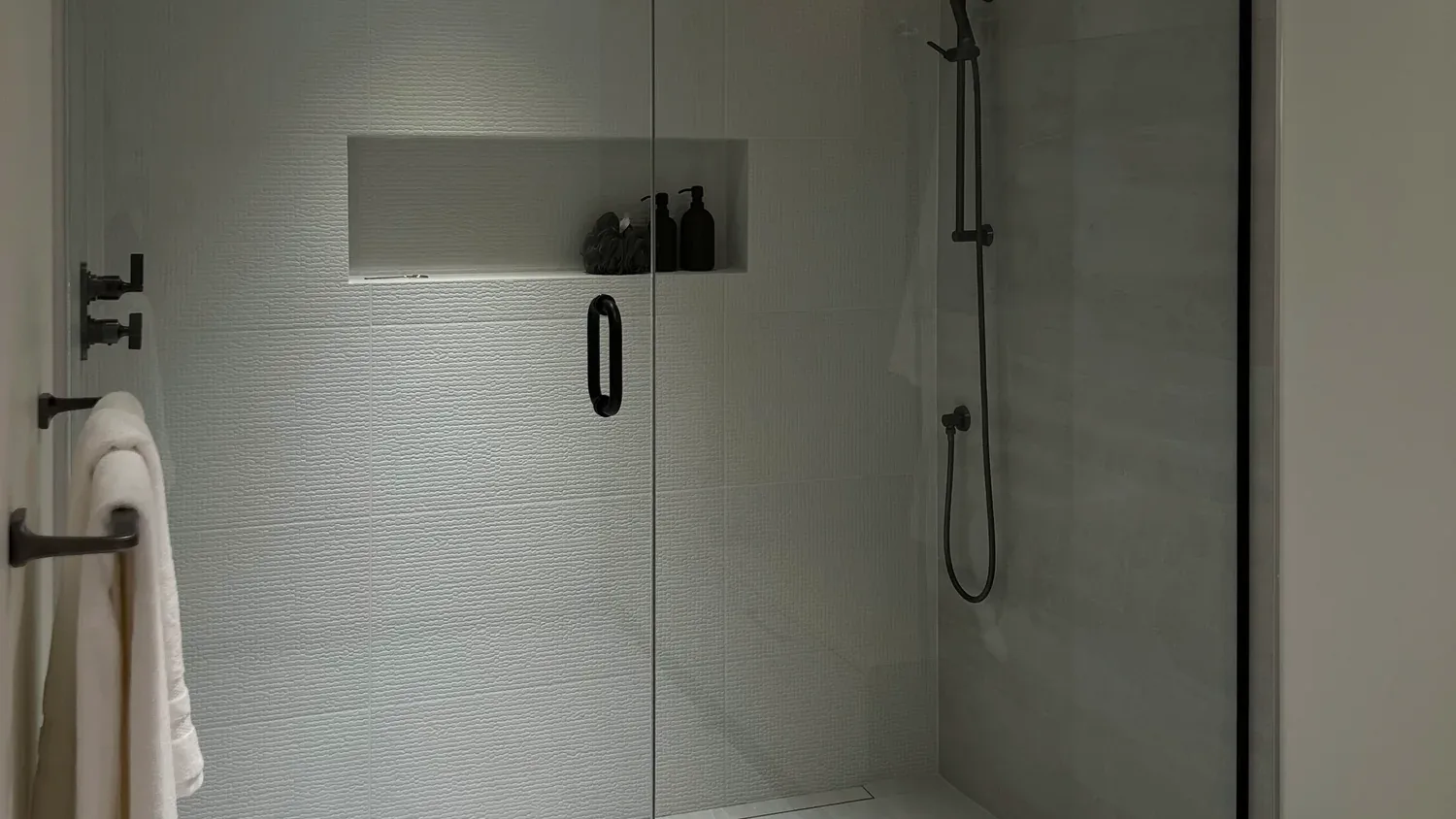
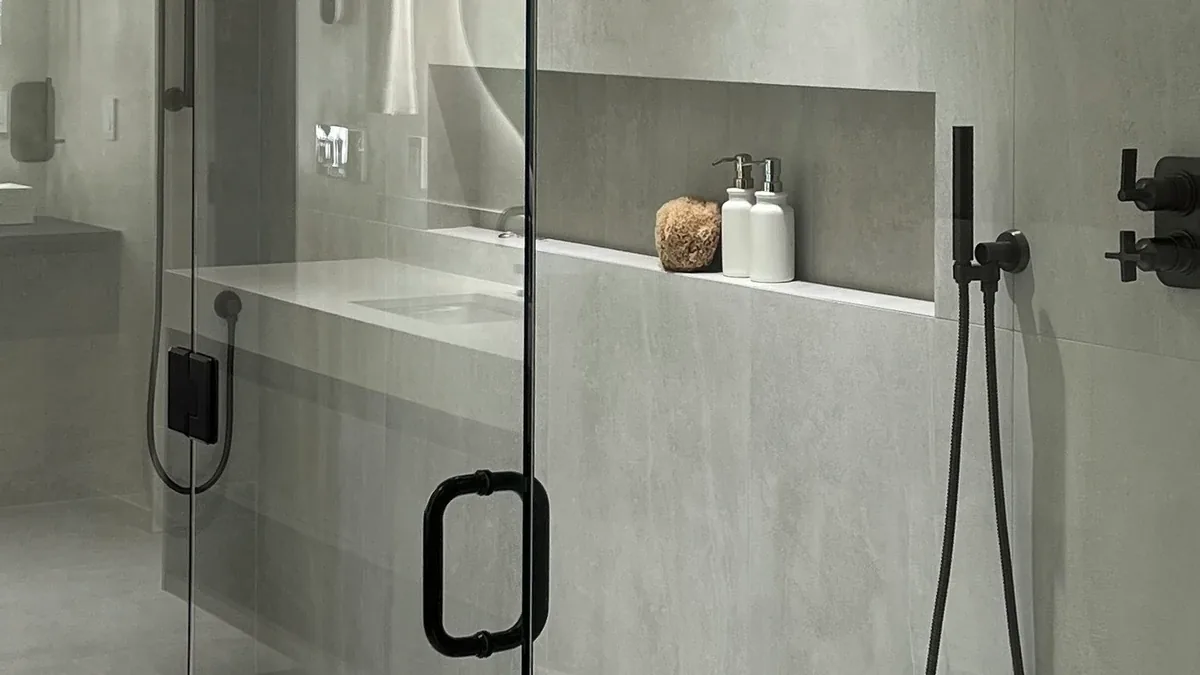
A framed door uses thinner glass held in a metal frame on every edge, which is why it sits near the bottom of the table. Semi-frameless keeps a slim frame around the fixed panels and leaves the door edge bare. Frameless uses thick tempered glass on every panel with no perimeter frame, so the glass and the hinges carry all the weight. Thicker glass and heavier hinges are where the extra cost goes.
We install frameless and semi-frameless doors as well as custom heavy glass. Our frameless shower doors page covers how those are built and how they differ from semi-frameless.
Size and configuration
Price follows the amount of glass and the number of pieces. A single door on a narrow opening is the smallest job. A door with a fixed panel beside it adds a second piece of glass and more hardware. A corner or neo-angle enclosure adds more panels and more angles to measure, which is why it lands near the top of the table.
Tall panels and oversize openings add glass and weight. A steam shower enclosure adds more: it runs to the ceiling, often with a transom above the door, and it has to seal around the full perimeter to hold the steam in.
Glass thickness
Frameless doors use 3/8 inch or 1/2 inch tempered glass. HomeGuide lists 3/8 inch clear at $12 to $50 per square foot and 1/2 inch clear at $15 to $58, before installation. Thicker glass is heavier, so it also calls for heavier hinges.
On a standard opening, 3/8 inch is the usual choice. We move oversize panels up to 1/2 inch so the door still feels solid at that size.
Clear or low-iron glass
Standard clear glass has a green tint you can see along the edge. Low-iron glass removes most of it. Vitro sells its low-iron glass as Starphire, and other makers have their own versions. As of October 2026, Starphire runs about 60% more than standard clear for the glass itself, and other makers’ low-iron glass usually costs a little less. HomeGuide and This Old House both put the low-iron upgrade at $6 to $15 more per square foot.
Hardware, templating and installation cost the same with either glass, so the total goes up by less than the glass does. Our Starphire vs. standard clear glass comparison covers when the upgrade is worth paying for.
Hardware
Hinges, handles, clamps, a header or support bar on longer runs, and the seals along the bottom and edges all show up on the quote. A frameless door needs hinges rated for the weight of its glass, and a long walk-in run may need a support bar to the wall.
Finish is the other choice. We install 14 hardware finishes, from polished chrome and brushed nickel to matte black and unlacquered brass, and we bring real samples to the measure so you can hold them against your faucet and tile.
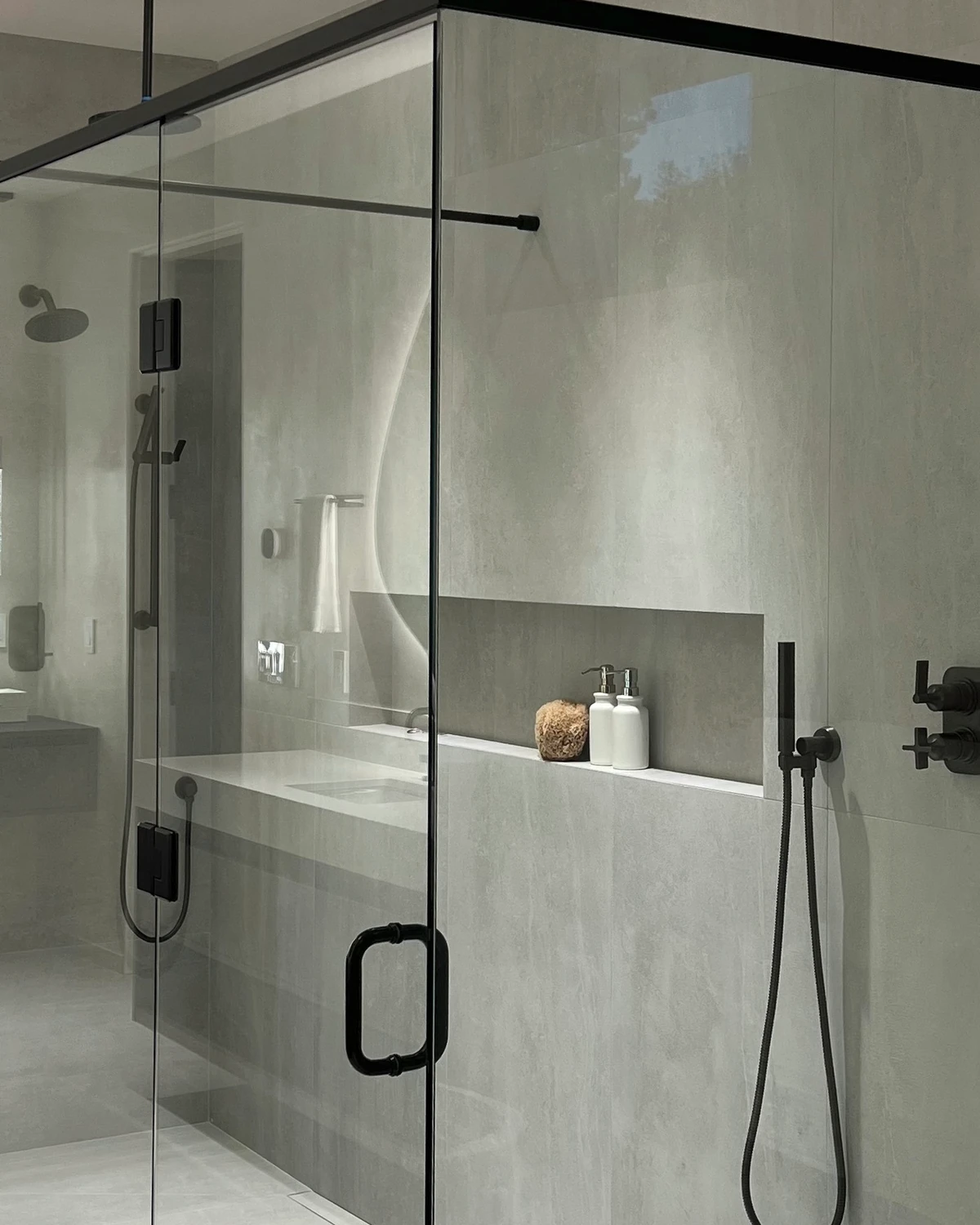
The opening itself
This is the part a national average can’t see. Stock and semi-custom doors assume a level curb, plumb walls and a standard width. Puget Sound housing rarely cooperates, and older Seattle bathrooms least of all.
A wall that leans half an inch over six feet, a curb that isn’t level, a tile niche or bench the glass has to notch around, or a pony wall the glass has to sit on all change the shape of the glass. Every notch and angle is cut before the glass is tempered, because tempered glass can’t be cut afterward. That makes the measure the most important step on the job. When no standard shape fits, the project becomes a custom shower door.
Taking out the old door
HomeGuide puts removal of an existing door at $30 to $100. On a replacement, the old door can leave work behind. Framed doors are usually screwed and caulked into the tile, so taking one out can leave holes to fill before the new glass goes on. Make sure the quote says who handles that.
How we price a shower door
Every quote starts with a free in-home measure. Tim comes out himself, checks plumb, square and the substrate, and goes over configuration, glass and hardware with you. It takes about 30 to 45 minutes.
From the measure we template the opening. A local fabricator cuts and tempers the glass to that template, and Tim and his team come back to install it. Most jobs run about 1.5 to 2 weeks from measure to install, and specialty glass like Starphire can take longer. The quote comes in writing after the measure, so the number reflects your actual opening instead of a guess.
We’re licensed, bonded and insured in Washington. The first year of adjustments, like hardware tweaks and settling, is covered.
Where you can save, and where you shouldn’t
A few choices bring the number down without hurting the result:
- Standard clear glass instead of low-iron, especially on a small enclosure or with dark tile
- A door and one fixed panel on a straight wall instead of a corner enclosure, where the layout allows it
- 3/8 inch glass on a standard size opening
- Replacing a door on an existing curb that’s in good shape, so the tile stays as it is
We wouldn’t save on hinges or on the measure. A heavy door on undersized hinges sags over time, and a glass shower measured wrong can leak more than a curtain did.
If you want a real number for your bathroom, request a free quote. Tim will measure the opening and go over the choices that move the price, and the quote follows in writing.